


While it is very important to ensure that your customers visit your online store to purchase your products or engage your services, if you have one or more physical locations, you also need to work on your local SEO optimisation so you can pull customers into your brick-and-mortar locations.
You may pop out a sandwich board, drop flyers, or even have a billboard. But if you are not utilising local SEO optimisation techniques on your website, you are likely missing out on a substantial customer base.
Today, we are going to break down what local SEO is and share some valuable local SEO tips to get you started on your journey towards local domination. Read on as we break it down in our handy checklist.
1. Keep Your Google Business Profile Updated
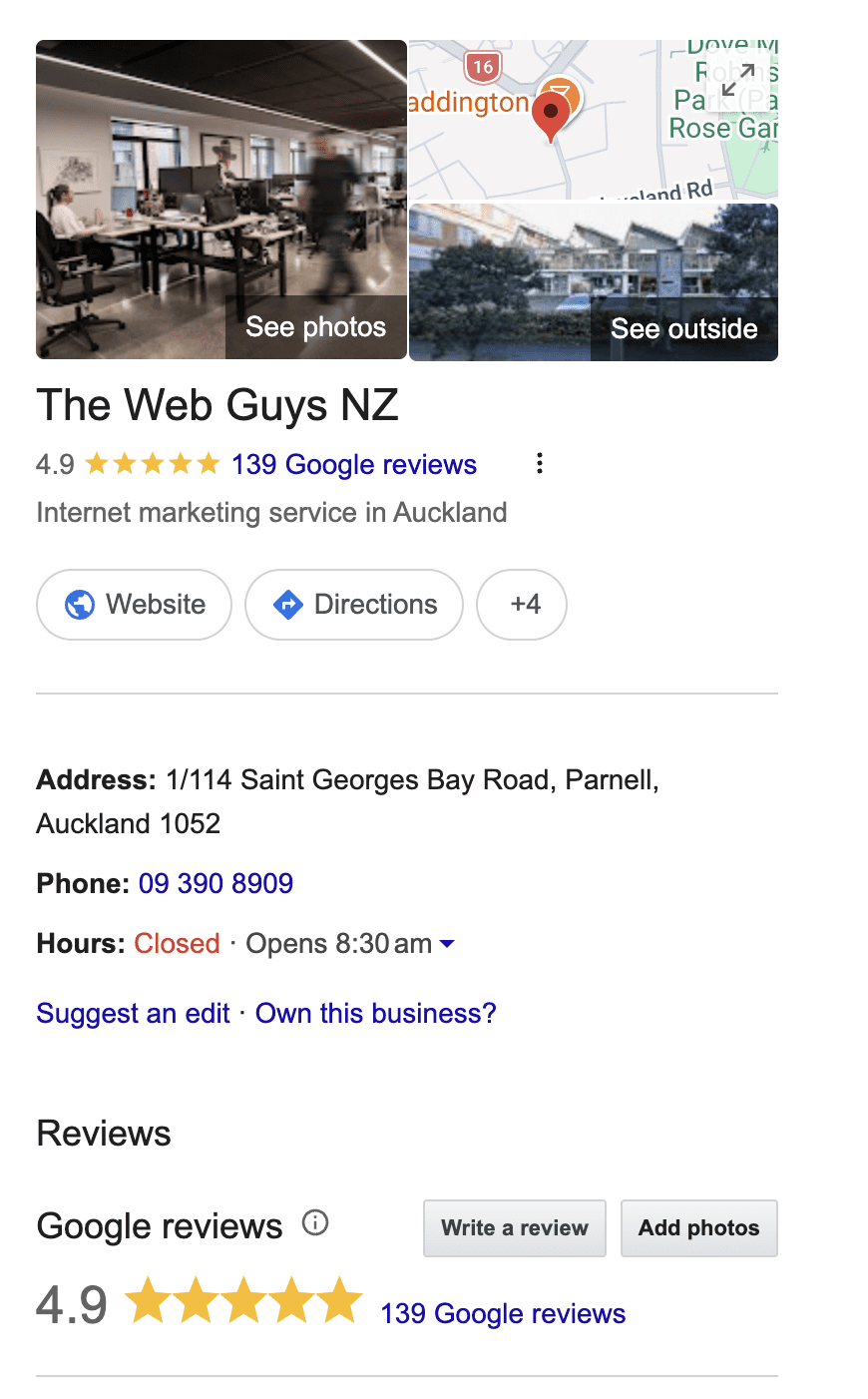
An up-to-date Google Business Profile (GBP) is critical to your local ranking; if it is current and accurate, you are more likely to be picked up by local search engines and AI Map algorithms. Google also likes it when your profile is somewhat dynamic, so adding posts and photos, and verifying your opening hours will help you remain visible as active.
The goal is to get added to the ‘Local Pack’. These are the businesses that are chosen to feature in the list of the top businesses in your area for whatever the customer is searching for – like this:
You can use your GBP to showcase events, special sales, or new products and services, and keeping your photos fresh has been proven to boost engagement. Regularly updating your GBP will ensure your opening hours are always correct, and jumping on as soon as a new review comes through and responding – in the right way – will help you to rank locally.
2. NAP
Your NAP is your name, address, and phone number, and should be accurate everywhere it is posted. This includes your website footer, your Facebook page, Instagram, LinkedIn, and, of course, your GBP. Keeping this uniform data accurate speaks significantly to reliability and authenticity, and can prevent you from losing sales when customers get confused or flag inconsistent information as troubling or potentially fraudulent.
3. Location-Based Keywords on Website Pages
This is an essential local SEO tip that all businesses need to note and address. Whether you are running a hotel in Queenstown, a cafe in Wellington or a tourism business in Christchurch, local keywords are the foundation of your local SEO. Search engines surface businesses that indicate local proximity, whether regional, urban, or suburban. You will rank higher if you are flagged near specific landmarks in your area, and your traffic is much more likely to include high-quality leads poised to convert.
4. Dedicated Location Page for Each Location
If you serve multiple areas with your trade or service business, or have a brick-and-mortar store in more than one physical location, you will definitely need dedicated location pages on your website, and they should be carefully SEO-optimised for the best local keywords for each location. Your dedicated pages should include the address and phone number for that location, and Google Maps integration is a good idea as well.
Each location page must have unique content; you can’t just copy the previous one and change the name. Adding local social proof (i.e, customer reviews/testimonials) is a great idea too.
5. Add Local Schema Markup
Schema Markup is structured data (code) that gives your content meaning, making it easier for standard search engines and emerging AI search systems to understand. It is essential for your Home page, location pages, and your contact form page, at least. You will need expert help, as the schema has its own vocabulary. If you can employ someone who speaks that language at a professional level to add your schema markup, you will have a better chance of driving traffic to your site.
6. Encourage Genuine Reviews & Respond Promptly
As trust signals go, reviews are among the most powerful. Alongside a prompt, positive response to all reviews that embodies your brand voice, you should use automated prompts to encourage reviews.
There are many ways to reduce friction in the review process for your customers. You can add QR codes to your receipts that direct customers to your GBP review space, or utilise personal messaging that name-checks the product or service they engaged with. A great idea is to incentivise your review process with a discount, a free sample or an entry into a draw.
Always try to move negative reviews to a private conversation and acknowledge that the customer is upset with an empathetic reply.
7. Build Local Citations & Backlinks
You can help strengthen your local SEO by making it easier for customers and search engines to trust you when they find you. This ties in some of the points above, like ensuring accurate NAP details across every place you appear, but it also includes building citations and backlinks. This means building relationships with businesses and organisations in your area and having them talk about you, your website or social links in their own online materials.
There are many directories in local areas that advertise local businesses, so that is a good place to start making valuable connections with other genuine companies and groups near you.
9. Add Locally Relevant Blog Content
When you add local blog content to your website, it helps to build confidence in your brand. To build up your local SEO optimisation score, you can discuss local events, name check suburbs in your area, feature regional events and highlight how your services and products are being utilised in your area. When you add local keywords to your blogs, you build on the foundation of keywords on your site in ways that feel natural to search engines. This also helps AI search match you with local intent as you show your customers that you can specifically serve their needs where they are.
Are You Ready to Be Found By More Local Customers?
So, as you can see, local SEO optimisation is not a single action. But you can use all of these tips and tools to build layers of local SEO and create a coherent online presence that customers, search engines, and AI systems will respond to positively. It is essential to get specialist SEO help for most of these points, and the approach should begin with a detailed, polished strategy developed at least 6 months in advance.
Contact The Web Guys for Local SEO Optimisation Now
If you are ready to connect to customers in your area and have your business surfaced in evolving search systems, we can help. Get in touch now or request a free website audit here.